
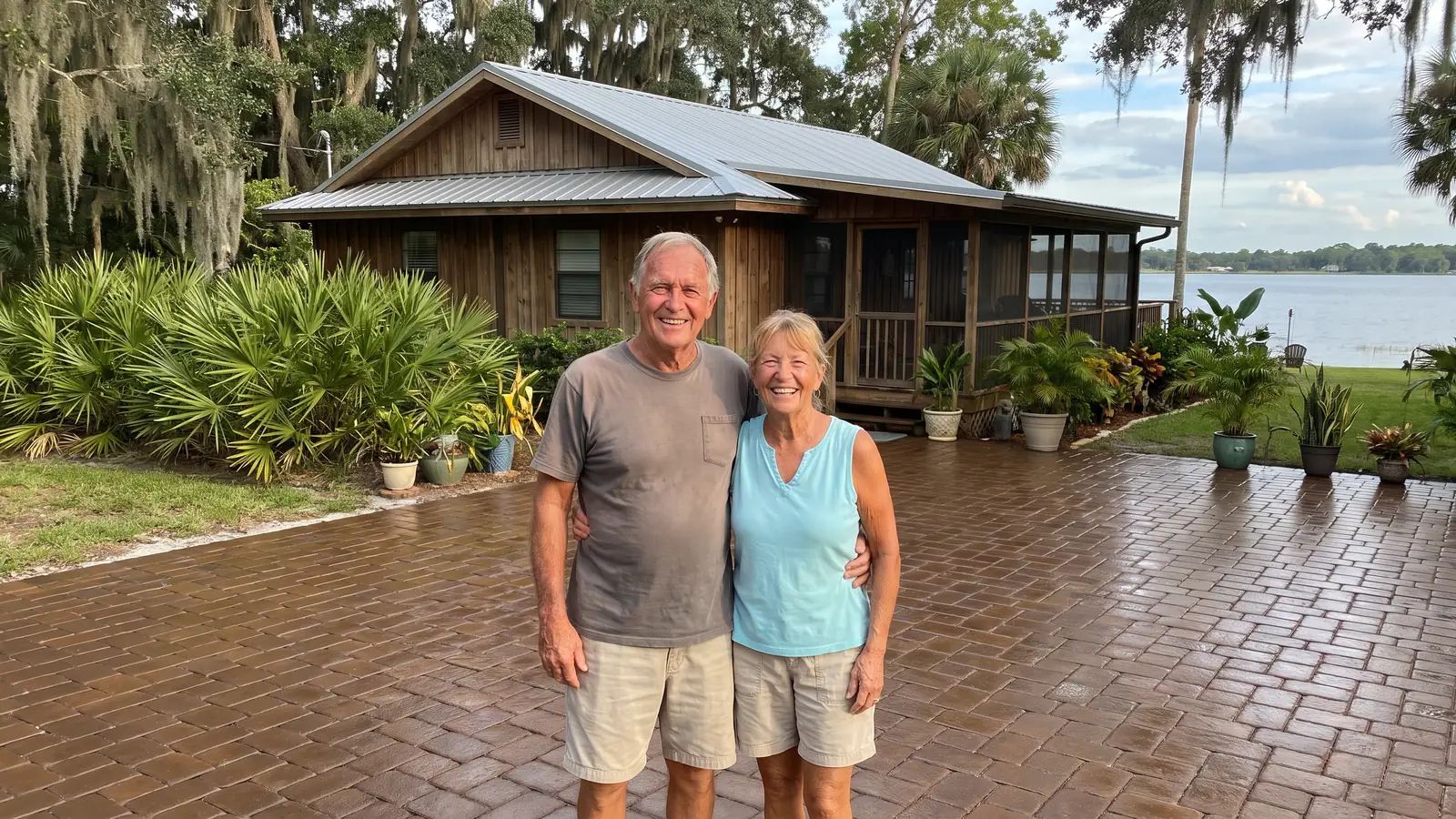
Paver sealing for The Villages homes
Paver Sealing in The Villages, FL
Golf carts, lanais and sandy ground wear on The Villages pavers, so call (386) 977-8354 for a free sealing estimate.
- Brings out deeper paver color
- Fresh joint sand helps lock pavers in place
- Gives weeds less room to grow
- Makes the surface easier to keep clean
- Free estimate, no obligation
Request a Free Estimate
Free, no obligation.
Fast, careful paver sealing in The Villages
Paver sealing is available all over The Villages, in the Sumter, Lake and Marion County parts alike. A local contractor washes the stones, refills the joints and seals driveways, lanais, patios and walkways, and the first look is free. Replies go out within 1 business day, and most come back much sooner. To start, ask for a free estimate.
A lanai floor that has lost its color, with white haze at the edge and gaps where sand used to be, is a common sight. Cleaning, fresh sand and a new coat can even it out. To talk through what you see, call (386) 977-8354.
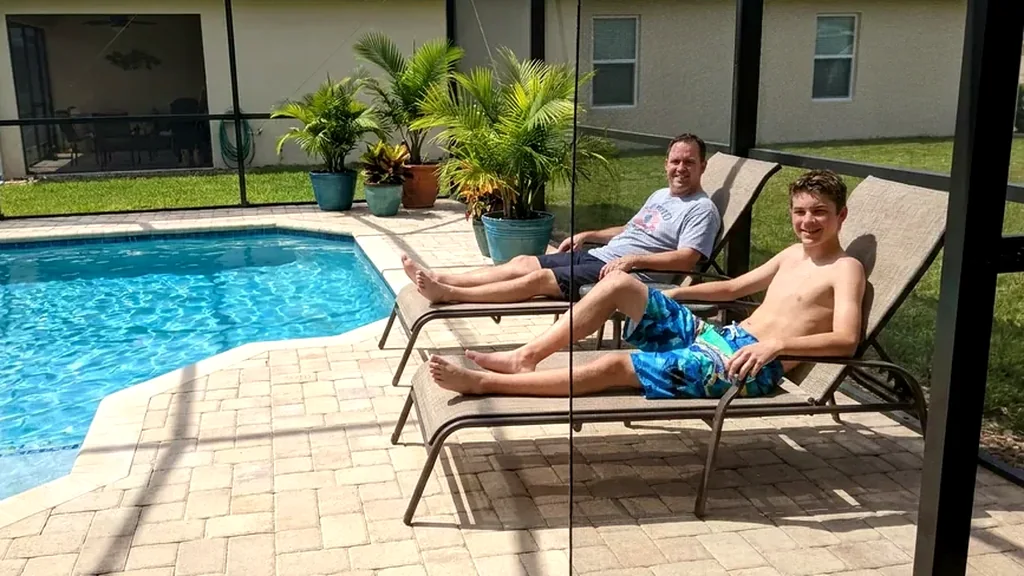
Why hire a local paver sealing contractor in The Villages?
Sprinklers next to the lanai, carts over the driveway and deep sand under it all: that is daily life for a paver in The Villages. A contractor who works here plans for each, and you can ask for a free estimate to hear how.
Free first look
A visit to your driveway, lanai and walkway is free, and you get a price before deciding. Point out stains or worn joints while someone is there.
Size up the bid
The going rate in Northeast Florida is $1.75 to $3.25 per square foot for the wash, sand and sealer. Use it to size up a Villages bid, and ask what each quote includes.
A cart-friendly finish
Carts and shoes scuff a coat. Matte hides those marks, and a wet look deepens color but shows wear sooner.
Your home, your call
You pick the day and the finish and decide whether to go ahead. Questions about paperwork stay between you and the contractor.
Get Your Free Estimate in The Villages
Tell us about your pavers in The Villages.
Free, no obligation
What paver problems show up most in The Villages?
Carts and cars on the same stones
A paver company that serves the area says golf-cart and driveway traffic wears joint sand. Carts turn tightly near the garage, and the same stones take car tires. Golf cart bridges carry carts over State Road 44 and Florida's Turnpike, which shows how far cart traffic reaches. Grit stuck to wheels acts like sandpaper on a worn coat, so matte is worth a look. Carts travel on paths and driveways here, and golf cart bridges link areas across State Road 44 and Florida's Turnpike. The same few feet of driveway take the same turn day after day, so wear shows there first. Tire marks also show on a bright driveway, so the wash is as much about looks as wear. A short sweep of the driveway each week keeps grit off a fresh coat.
Sprinkler spray and orange streaks
Lanai and patio pavers are listed as exposed to irrigation overspray. Florida extension specialists say most well water is iron-rich, and orange streaks often show where it irrigates. A lanai near the lawn gets the most spray. Rust lines are treated before sealing, because sealer would seal them in. Moving a spray head a few degrees away from the stones keeps new marks from forming. The surfaces nearest the lawn take the heaviest spray, and the pattern repeats with every watering cycle. Over months, that builds a visible band of color along the edge. Rust from sprinklers shows up soonest on light-colored pavers. If orange streaks run in a line, the cause is usually a single sprinkler head.
Deep sand that drains fast
USDA describes the Candler series as excessively drained sand more than 80 inches deep, with 50 to 60 inches of rain a year. Water runs through ground like that quickly and can take joint sand along. Sand also shifts under edges, so check where the driveway meets the street. Joints are filled again before any coat goes on. A walk along the garage apron after a heavy rain shows where water cuts through. Many areas of the Candler series grow citrus, a crop that likes ground that drains. Rain soaks in rather than puddling, which is fine for a lawn and hard on loose joint sand. That is why joint sand is the first thing to check on a Villages driveway. The community sits about 52 feet above sea level, and ground this sandy rarely stays soggy for long.
A white haze that returns
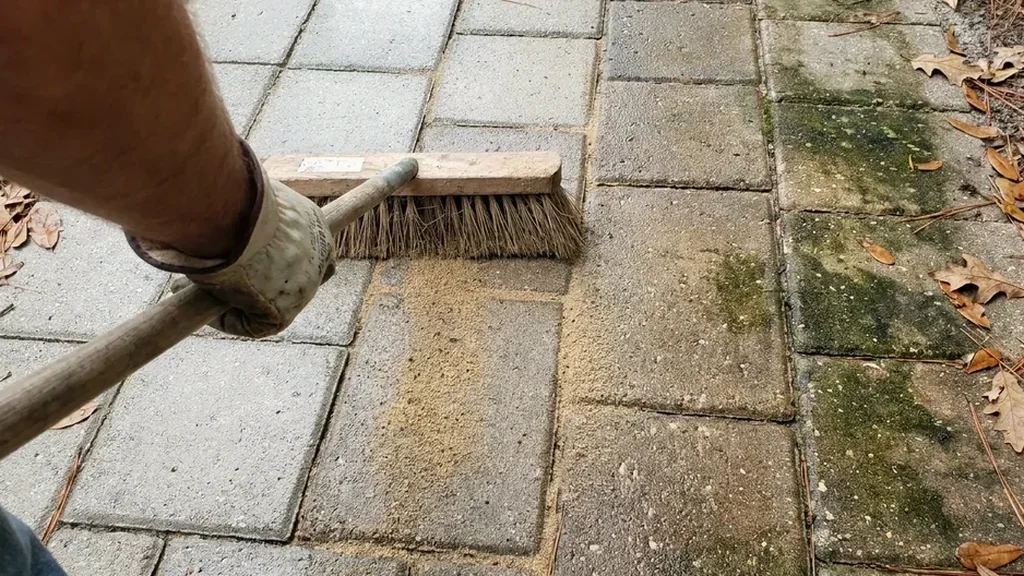
Efflorescence is a white mineral haze that Unilock says does not harm concrete pavers but must be cleared before sealer goes on. A local paver site lists efflorescence help and joint sand replacement among its services. If a chalky film keeps returning after rain, tell the contractor. Sealing over it would lock it in. Haze often looks worse after a dry spell and better after a rain, which confuses many owners. A haze on young pavers is often not a defect, since efflorescence usually appears in the first or second season and fades with weathering. Still, a coat applied over haze can look cloudy, so the wash comes first. A local paver site offers separate pages on efflorescence and on joint sand, a sign that both questions come up often here.
Wear that shows from the street
A local company lists HOA-visible color fade, mildew and weeds as common reasons to call. The community spans 33.95 square miles, so conditions vary from one village to the next. A wash clears mildew, fresh sand shuts out weeds and a coat helps hold the color. Check your own paperwork for any rule on sheen. Mildew and weeds are the two signs neighbors notice first. Neighbors see your driveway from the street, so small flaws read as large ones. Mildew at the edge, a patch of weeds and one faded stripe are the usual three. Four other districts handle commercial areas and utilities, and 17 community development districts govern most of the rest, so a question about exterior work may start with your district office or property manager. Wear that shows from the street is easier to fix in one visit than in several.
Does the part of The Villages I live in change the job?
It can, because the community is large and was built in stages. It spans 33.95 square miles across Sumter, Marion and Lake counties, from US 301 on the west to US 27/441 on the east. Older areas may hold an earlier coat, and newer ones may never have been sealed. Share about when your home went up when you ask for a free estimate.
The Villages has five town centers: Spanish Springs, Lake Sumter Landing, Brownwood Paddock Square, Eastport and Sawgrass Grove. Which one is nearest tells the contractor your general location and the drive in. Call (386) 977-8354 and name your village or the closest town square.
Most of The Villages is governed by 17 community development districts, and at least 80 percent of homes must have a resident aged 55 or older. The sources read for this page say nothing about sealer sheen or color rules. Check your deed and closing paperwork, then ask for a free estimate and ask which sheens are common.
What does paver sealing cost in The Villages?
Quotes in The Villages follow the area being sealed, so measure first. Published Northeast Florida prices run from $1.75 to $3.25 per square foot, which includes the wash, sand and sealer. Haze, mildew or an old coat in poor shape pushes a job upward. To get a figure, ask for a free estimate.
A failed old coat has to be stripped first, which adds hours. A small patio is billed by its own size, and a tight lanai that must be reached by hand takes longer than an open drive. Call (386) 977-8354 for a plain list of what applies.
| Paved area | Typical example | Clean, sand and seal |
|---|---|---|
| 300 sq ft | Small patio or walkway | $525 to $975 |
| 600 sq ft | Two car driveway | $1,050 to $1,950 |
| 1,000 sq ft | Large driveway or pool deck | $1,750 to $3,250 |
| 1,500 sq ft | Driveway plus pool deck | $2,625 to $4,875 |
Math based on the $1.75 to $3.25 per square foot that Northeast Florida paver companies publish. Your contractor sets the actual price after seeing the surface. Repairs, leveling and stripping failed sealer are usually extra.
How does a paver sealing job work in The Villages?
You show the problem spots
You walk the property with the crew and point out rust lines, white haze, worn joints and any low stone. They press on stones that rock and look for sealer that is already down. A sunken stone is reset first, since a coat would keep it sunk. Say which surface worries you most so it gets looked at first. A short list of what worries you saves time on the day.
The wash clears the film
Mildew, haze, tire marks and sprinkler rust come off in the wash. Pressure matches the stone, so joints stay put. Screens and plants are protected, and pool decks and lanais get extra attention. A final rinse sends loosened dirt away from the surface. Chalky haze sometimes needs a second scrub.
New sand fills the gaps
With the stones bare, silica sand is swept in until every joint is full. Deep Villages sand drains fast, so loose joints do not stay full for long. Joints packed full let the stones brace each other under tires and carts. The surface is swept clean again afterward.
Everything dries
A lanai under a screen can hold moisture long after the driveway dries. The crew waits for dry stone, because sealer over damp pavers goes milky. Afternoon storms can move the day. Many owners find the drier winter months easiest for this step. On a damp morning the crew can take a moisture reading before deciding to start.
Sealer goes down
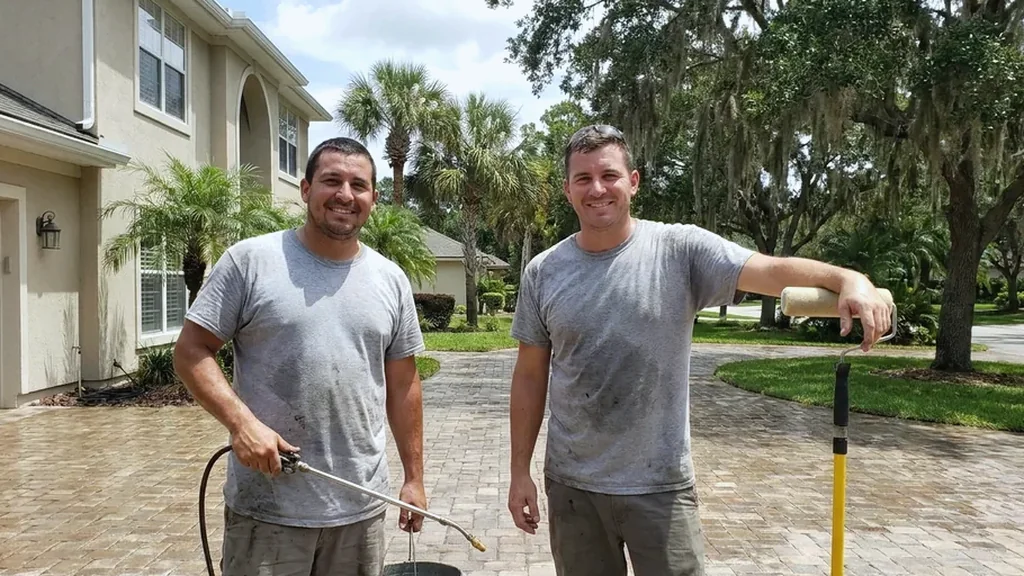
Spray goes on first. A roller then smooths the coat. You choose matte or wet look first. Feet can go back on in hours, while carts and cars wait about a day. Quotes tend to say two to five years per coat. Jot down the product name and the date for next time. Ask where the product name will be written on your invoice. Ask about the coat count in writing.
Complete paver services in The Villages
A Villages job has a rhythm: wash, sand, wait, seal. Mildew and haze are scrubbed away first, and fresh sand packs the joints. Only after the stones dry does the clear coat go on, with no shortcuts. For timing at your address, call (386) 977-8354.
A driveway takes tires and golf carts, a lanai takes sprinkler spray, and a walkway takes shoes and sun. Each ages in its own way. Pool decks are listed separately. List what you want sealed when you ask for a free estimate, and each surface gets its own price line.
Matte hides cart scuffs and shoe marks better than a wet look does, while a wet look gives a deeper color instead. First, though, any old coat has to be identified, since water-based sealer cannot sit on solvent-based. Pool-side lanais may call for a chlorine-resistant product. To weigh both choices, call (386) 977-8354.
Summer afternoons bring storms, so crews like a clear morning with dry stones. New pavers should rest about 60 to 90 days before a first coat. Ask about the calendar when you ask for a free estimate, and mention how old your pavers are.
Questions to ask before you hire
- Will the quote tell me how many square feet you measured and what each foot costs?
- Do you take a moisture reading before you seal, or only look at the surface?
- Will the sealer make my pool deck slippery when it is wet?
- How long should I keep cars and foot traffic off after sealing?
- If my HOA has rules about sheen or color, can you work inside them?
- Will you cover my plants and shrubs before you start washing?
- What do you do if rain is expected on the day of the job?
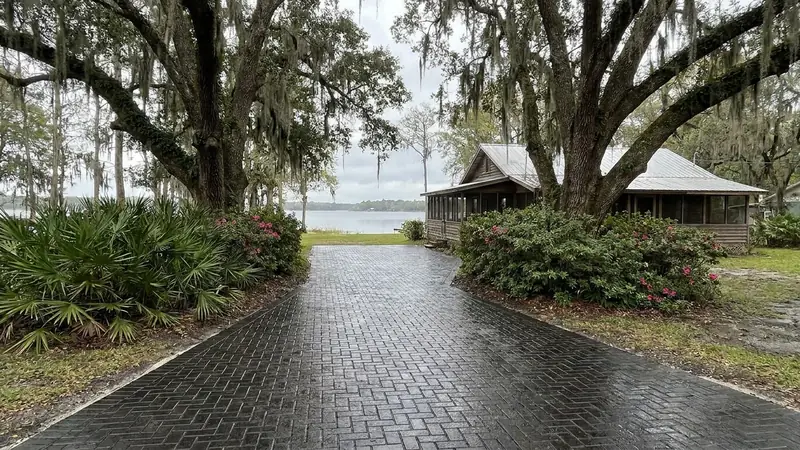
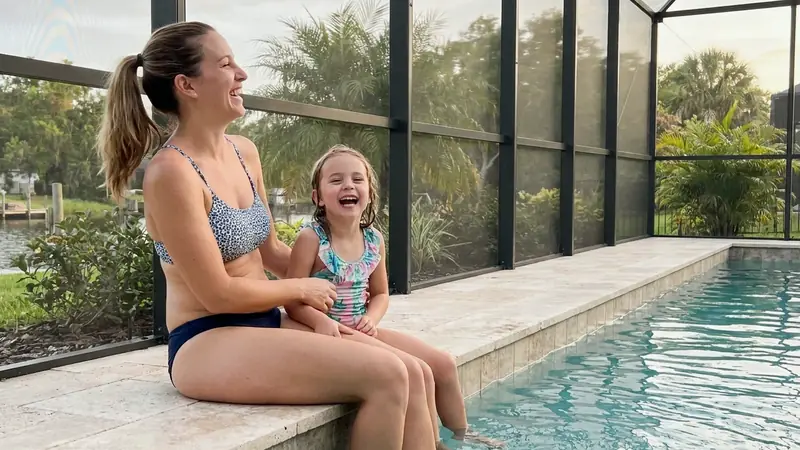
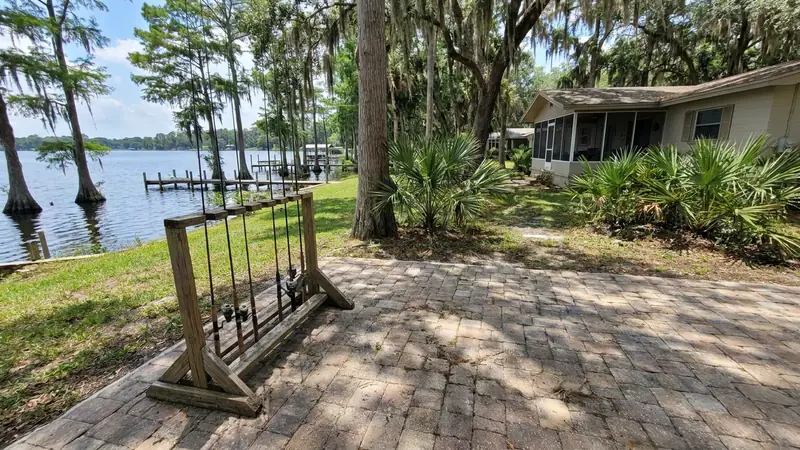
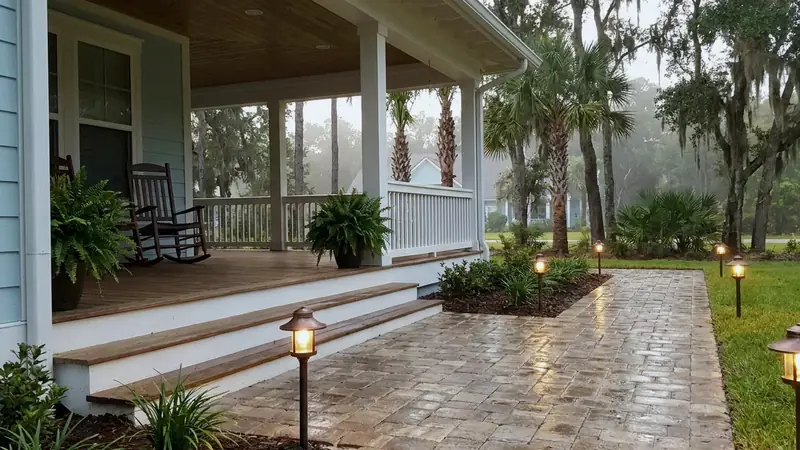
What do sealed pavers look like around The Villages?
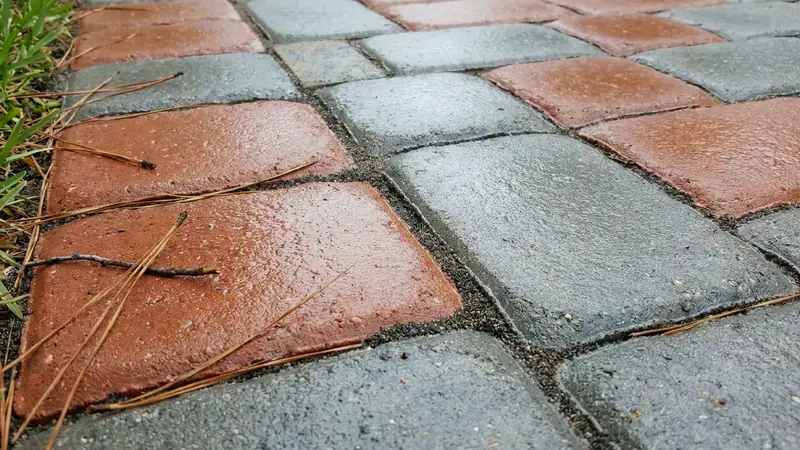
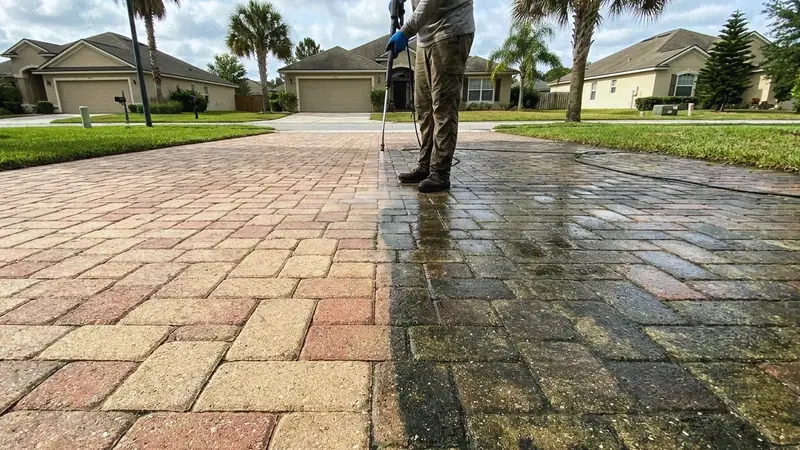
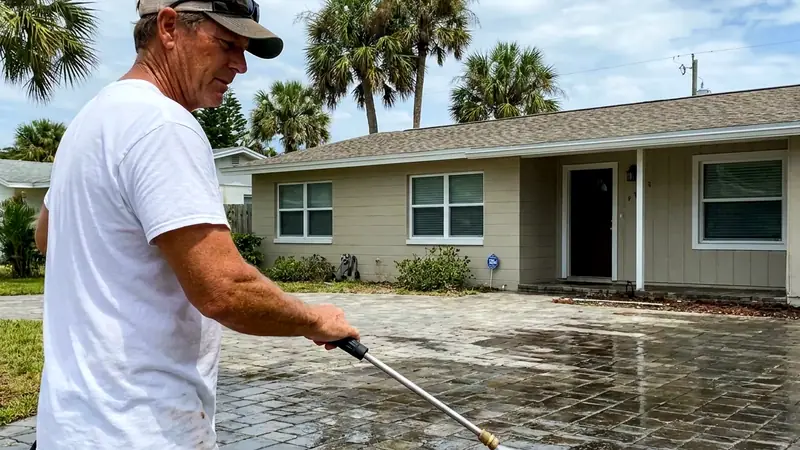
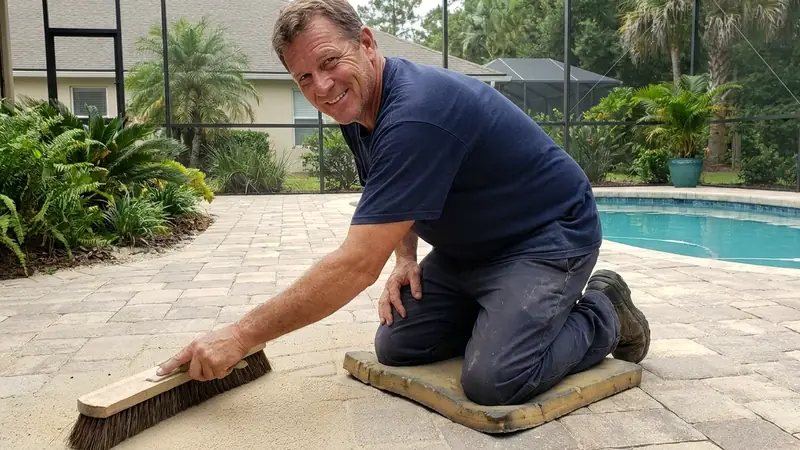
Why local matters in The Villages
Anyone who works The Villages learns early where the sprinklers spray and how carts turn into the garage. Those two habits explain most rust lines and worn joints. A crew from far away may skip that question. To reach a local contractor, call (386) 977-8354.
Appearance counts when every driveway faces the street, since a faded or weedy one stands out. A contractor used to that picks the cleaning and sand steps with the curb view in mind. To hear how a never-sealed driveway is handled, ask for a free estimate.
Deep sand under the neighborhood drains fast, so joints lose sand sooner than many owners expect. A local crew refills them and checks again after the wet season. To say which town square is nearest, ask for a free estimate.
Where is The Villages, and how did it start?
It sits where Sumter, Marion and Lake counties meet, between US 301 and US 27/441. In the 1960s, Harold Schwartz sold land here by mail order, until a 1968 federal law ended that. In the early 1970s he and Al Tarrson developed Orange Blossom Gardens, a mobile home park. If you live in one of the newer areas, ask for a free estimate.
Gary Morse joined the business in 1983, and the community took the name the Villages in 1992. It has five town centers, fishing lakes, waterfront parks and golf cart bridges over State Road 44 and Florida's Turnpike. Close to a town square or a golf cart bridge? Call (386) 977-8354 and give your street.
Frequently Asked Questions
How much per square foot is paver sealing around The Villages?
Expect $1.75 to $3.25 per square foot to wash, sand and seal, the range Northeast Florida companies commonly publish. Lost joint sand, white haze and old coats move a Villages job inside it. The quote should state the measured area. Lanais and driveways are priced as separate lines.
What is a paver sealant?
It is a clear coat applied after pavers are cleaned and re-sanded. It slows fading and helps hold joint sand. Sealers are water-based or solvent-based, and water-based cannot go over solvent-based, so ask which one you are getting. A professional will also tell you which type of sealer is already on your surface. The coat is usually clear, so the look stays natural.
Is it smart to seal pavers in The Villages?
Yes for most owners. Clear sealer shades the stones against UV, holds joint sand and discourages weeds. On the deep sand of The Villages, it also helps joints last. Ask the crew to show you a finished lanai, if they have a photo. Sealing also helps hold joint sand against sprinkler spray.
Is it better to spray or roll paver sealer?
A Jacksonville company reports that crews spray the sealer, then back-roll it to even the coat and work it into the joints. Rolling alone may leave lap marks, while spraying alone may lay it on thick. Ask which product goes on, so the next coat can match. Hand rolling also pushes the coat into low joints and along edges. The same two tools are in use at nearly every job.
How often does a paver patio need to be sealed?
Expect roughly two to five years per coat, going by quotes. Full sun and daily traffic push toward the short end, and a shaded lanai may last longer. If water sinks in and darkens the stone, the coat is worn out. A busy driveway used by carts and cars can sit near the short end of that span. Two to five years is a planning number, not a promise.
What causes white haze on my pavers in The Villages?
It is often efflorescence, a white mineral haze on cement-based pavers. Unilock says it does not harm concrete pavers but must be cleared before sealer goes on. If it keeps coming back after rain, say so at the first visit. Chalky haze that keeps returning is a sign to let the contractor take a closer look. A wash and a coat then help keep it from showing as much.
Can new sealer go over my old coat?
Not in every case, since a water-based coat will not hold over a solvent-based one. The old product must be identified first. Any old product label can settle the matter fast, and a failed coat may need stripping, which adds cost. Ask the contractor to test a hidden corner.
How soon can I seal new pavers in The Villages?
A Northeast Florida company says brand-new pavers should wait about 60 to 90 days. That time lets trapped moisture out and brings mineral haze up for treatment. A coat put on too early leaves moisture trapped below it. A short wait now saves a redo later. The wait also lets color settle across the surface.
Nearby areas we serve
Ready for a Free Estimate in The Villages?
Call (386) 977-8354 and tell us about your pavers.
Free, no obligation